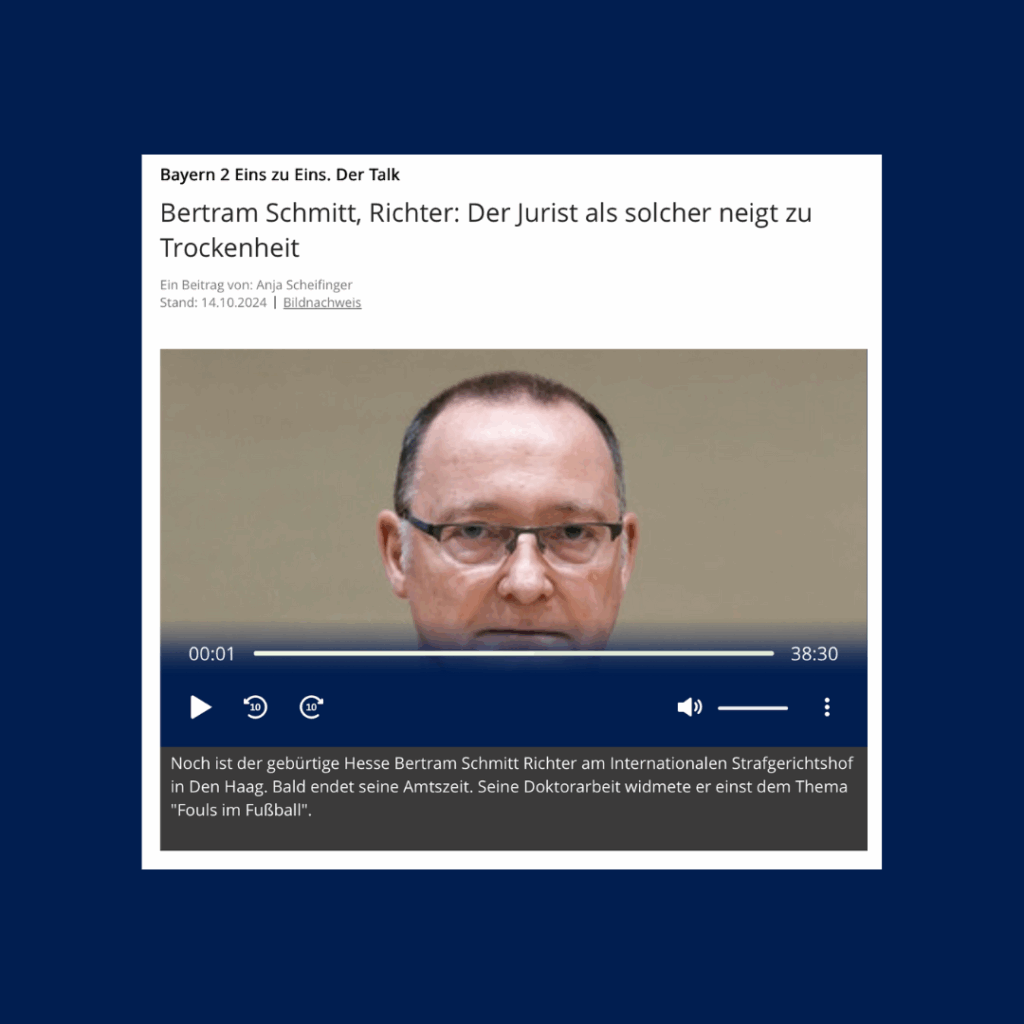
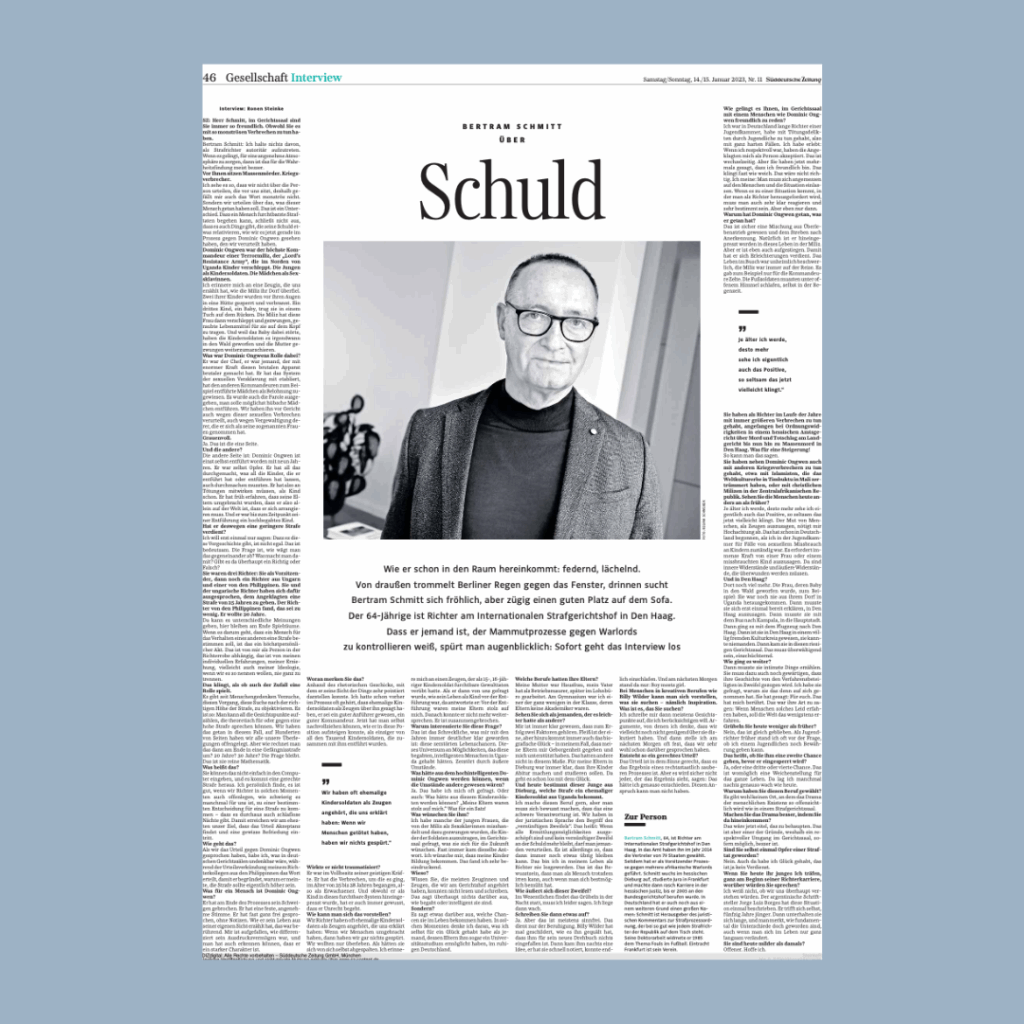
Bertram Schmitt is a German legal practitioner with many years of experience in national and international courts. He was a judge at the Federal Court of Justice in Karlsruhe from 2005 to 2015 and a judge at the International Criminal Court in The Hague from 2015 to 2025. Schmitt has been the author of the standard commentary on the Code of Criminal Procedure “Schmitt/Köhler” for many years. He has been an arbitrator for the arbitration board of the legal profession since 2025. Schmitt has been awarded the Cross of Merit 1st Class of the Order of Merit of the Federal Republic of Germany.
After studying law and completing his doctorate in Frankfurt am Main, Schmitt taught at the University of Würzburg. In 2000, he was awarded an Honorary Professorship for criminal law, criminal procedure and criminology at the Julius-Maximilians-Universität in Würzburg.
Schmitt began his professional career as a judge and later presiding judge at Darmstadt Regional Court. The “stone-throwing case” has attracted national attention. Young people had hurled stones weighing up to 8.4 kg from a bridge over a highway near Darmstadt, killing two female drivers and injuring other car occupants, some of them seriously.
At the Federal Court of Justice, Schmitt was initially a judge on the XI Civil Senate responsible for banking and stock exchange law, where he was involved in the Kirch v. Breuer and Deutsche Bank case, among others.
In 2007, he moved to the second criminal senate, where he was involved in the proceedings in the Siemens corruption scandal and in a case of euthanasia justified by (presumed) consent in abortion treatment.
During his time as a judge at the Federal Court of Justice, Schmitt was also a member of the Joint Supervisory Body of Eurojust in The Hague for several years and an ad hoc judge at the European Court of Human Rights in Strasbourg (ECHR). At the ECHR, he was involved in a decision according to which the equation of abortion with murder and the Holocaust is not covered by the right to freedom of expression. From 2008 until his retirement in 2015, Schmitt also headed the press office of the Federal Court of Justice.
At the ICC, Schmitt presided over three main proceedings as presiding judge. The proceedings against Jean-Pierre Bemba and four others concerned witness tampering in the main proceedings against the former Vice President of the Democratic Republic of Congo for war crimes and crimes against humanity. In the case against Dominik Ongwen, the most extensive at the ICC to date, crimes committed by the Lord Resistance Army in Uganda such as massacres of the civilian population, the forced recruitment of child soldiers and the sexual enslavement and forced marriage of abducted girls were tried.
The trial against Patrice Eduard Ngaissona and Alfred Yekatom ultimately concerned crimes against the Muslim civilian population of the Central African Republic, such as murder, expulsion and persecution on religious grounds. Schmitt also participated as a judge in the proceedings against Ahmed al-Faqui Al-Mahdi, a leading member of an Islamist militia, who was convicted of destroying world cultural heritage sites in Timbuktu (Mali).
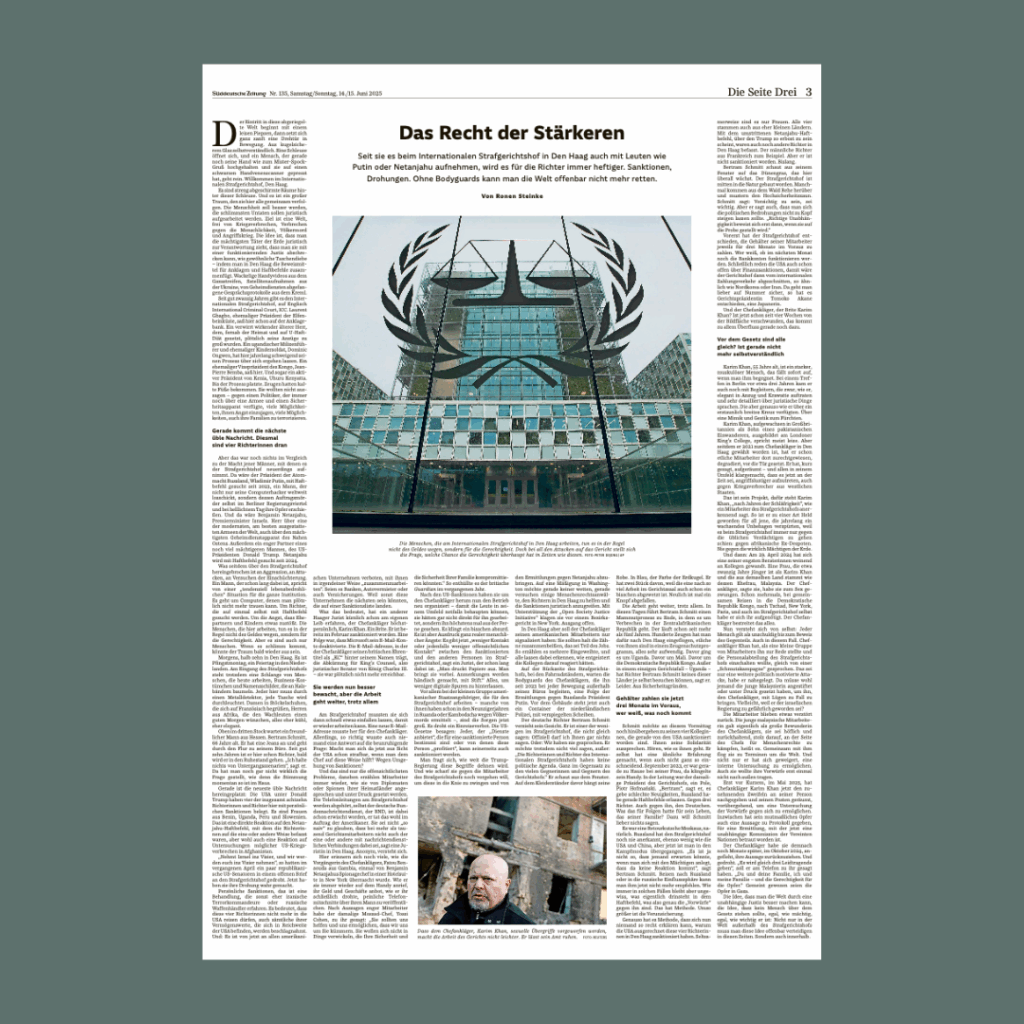
Today, Prof. Dr. Bertram Schmitt is available as an expert for consultations, lectures and media appearances. With his many years of experience in criminal law and at the highest national and international courts, he is a sought-after contact for legal and social issues.
His explanation (together with Marcus Köhler) of the German Code of Criminal Procedure is one of the most important standard works, especially for criminal law practitioners. It comprises the Courts Constitution Act as well as ancillary laws and supplementary provisions.